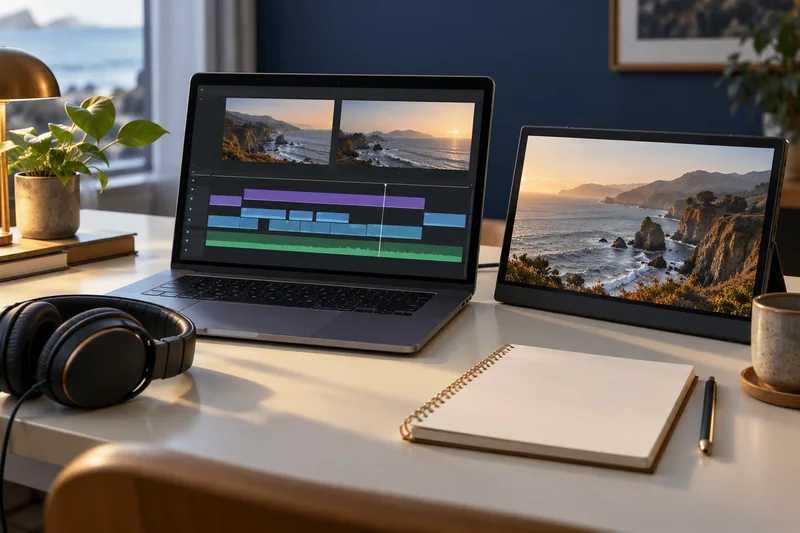
I would use interpolation when its motion improvement survives a close review of difficult frames. Optical flow estimates intermediate images; it can distort crossing objects, fine patterns or occluded edges. A smoother-looking preview is not enough to approve the final shot.
On this page
Our recommendation
I favour the least distracting method that preserves the subject and intended meaning. Approve difficult generated frames explicitly, especially in factual, product or identity-sensitive material.
Choose a representative difficult region
Find hands crossing a face, a fast object against a busy background, motion blur or an object leaving the frame. Test the intended speed change on that region before applying the method across a sequence. Keep the original and a simple frame-sampling alternative for comparison.
Separate the desired duration from the interpolation method. First decide the timing the edit needs, then compare supported ways to produce it. Do not assume the most expensive or AI-labelled option is automatically the best fit for every shot.
Review frame by frame and at speed
Inspect the generated frames for bending lines, doubled edges, disappearing detail and changing object shape. Then play the result at normal viewing size with surrounding shots and audio. A defect invisible during rapid playback may still matter in a paused review or a larger delivery.
Render a short proof with the actual final settings. The editor’s reduced-resolution preview may not match final processing. If the method fails, reduce the speed change, choose another take or use an agreed simpler treatment rather than hiding a severe artifact in a long export.
A useful A/B test
Slow a short shot containing a hand passing in front of a patterned shirt. Compare frame sampling, frame blending and the available motion-estimation method at the same duration. If the interpolated fingers merge for several frames, a less smooth but geometrically stable alternative may communicate the action better.
Before you act
- Test occlusion, fine patterns and frame edges.
- Compare methods at the same duration.
- Inspect the actual final-quality render.
Use the Frame-rate duration converter to apply the guide to your own setup.
Keep exploring
- Conform or convert frame rate? Decide whether duration should change
- Find wrong export ranges and unintended black frames
Method note: this is an original planning procedure with illustrative inputs. It does not report a physical product test. Check the exact product, edition and official instructions before acting.
Build on what you just learned
Your next useful step.
Budget the size, inspect the export, keep a record.
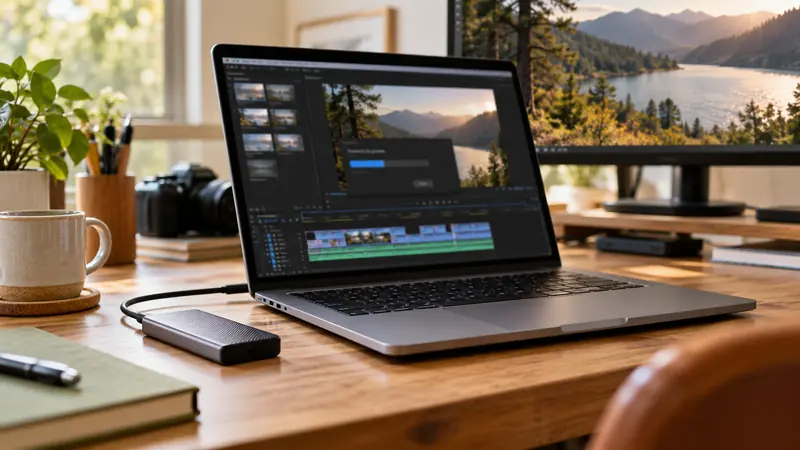
Generative Extend: a few extra frames still need an editorial review
I would use generated extensions for a deliberate transition or timing need, then inspect the new frames and identify them in the project record.
Read the guide →Budget video bitrate for a hard file-size limit
Allocate the total size budget across duration, audio and a stated reserve before choosing video bitrate. Then measure the actual exported bytes, especially when…
Read the guide →