Include relevant non-speech audio and speaker identification when a viewer needs that information to understand the scene. I would prioritise meaningful cues over a transcript of every background noise. Dialogue text alone can omit a sound that changes the interpretation of what is happening.
On this page
Our recommendation
I would build captions around the information needed to follow the programme, with a separate review for meaningful sounds and speaker identity. Do not call a dialogue-only automatic transcript a complete caption review.
Identify the information carried by sound
W3C’s caption guidance includes both speech and non-speech audio needed to understand the content. Listen to a section without watching the image, then consider what a viewer with the audio unavailable would miss. A doorbell, off-screen speaker or important change in music may matter more than a continuous irrelevant hum.
Do not identify a speaker or sound in a way that reveals information before the programme does. Use the recipient’s style conventions and keep names consistent. If the source itself is ambiguous, avoid inventing certainty in the caption.
Review with the complete scene
Check that the cue appears when the relevant sound occurs and remains readable with the dialogue. A useful sound description can still obstruct a speaker’s words if it is poorly timed. Consider the visual layout and the destination player’s caption behaviour.
Keep the description concise and specific enough to convey the role of the sound. Avoid adding an editorial interpretation that the audio does not support. Have a reviewer watch the finished captions with the sound unavailable as one part of the acceptance process.
An off-screen event
A character pauses because a phone rings outside the frame. If the caption track contains only the spoken sentence, the pause may seem unexplained. A timely, appropriately styled ring cue can convey the missing event without describing every incidental room sound. Check that it does not reveal who is calling before the scene does.
Before you act
- Include sounds that affect understanding.
- Avoid premature speaker or plot information.
- Review readability alongside simultaneous dialogue.
Use the Subtitle QA Desk to apply the guide to your own setup.
Keep exploring
- Check a subtitle export before the client finds a broken cue
- Choose burnt-in or sidecar captions for the recipient
Sources and research notes
Research checked on 21 October 2026. Product specifications are manufacturer statements; examples and buying judgements are our analysis. No hands-on product test is implied.
Build on what you just learned
Your next useful step.
Check the crop, captions and real viewing layout.
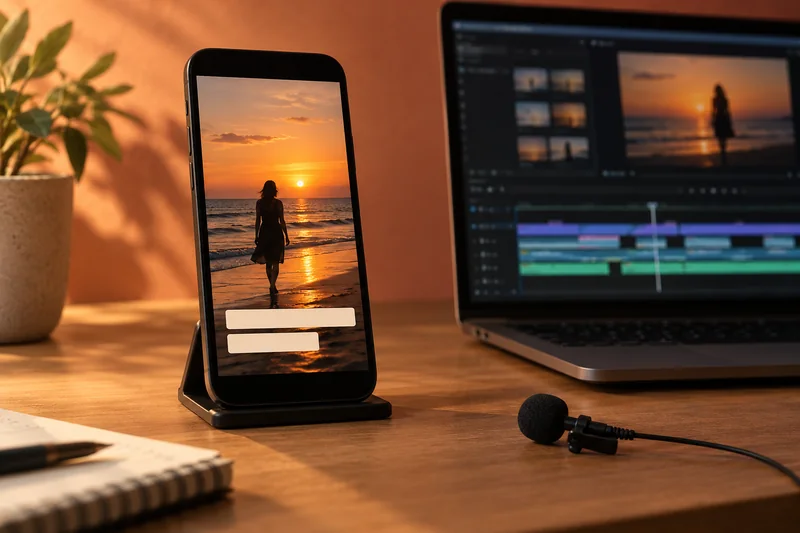
Premiere transcription: choose the language and proof names before making captions
I would transcribe a short representative passage before generating captions for the entire edit.
Read the guide →
Vertical video delivery for TikTok and Instagram
Build the vertical edit for the frame people will actually see, then verify it in the destination app. A 1080 × 1920 canvas is…
Read the guide →